Overview
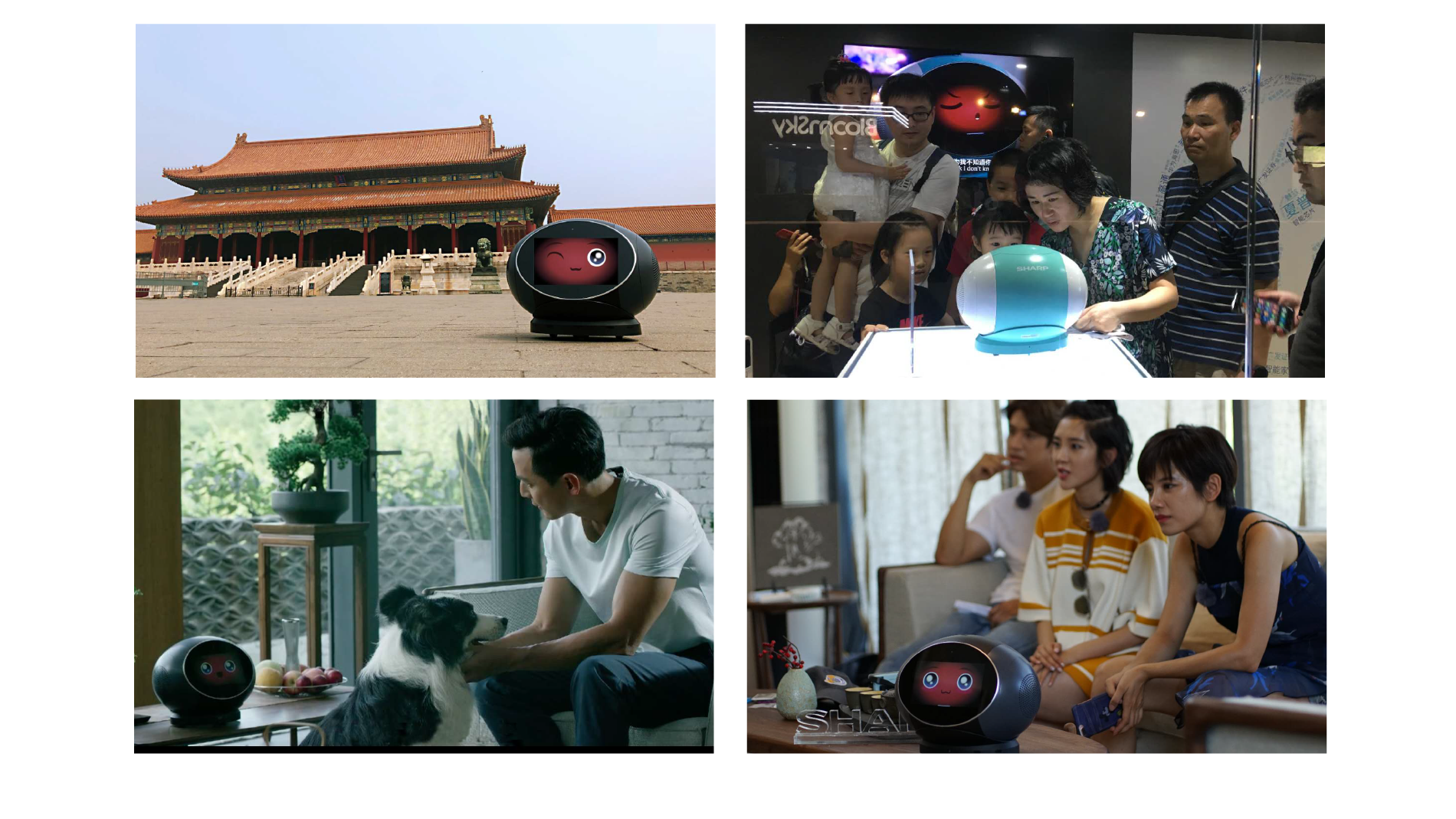
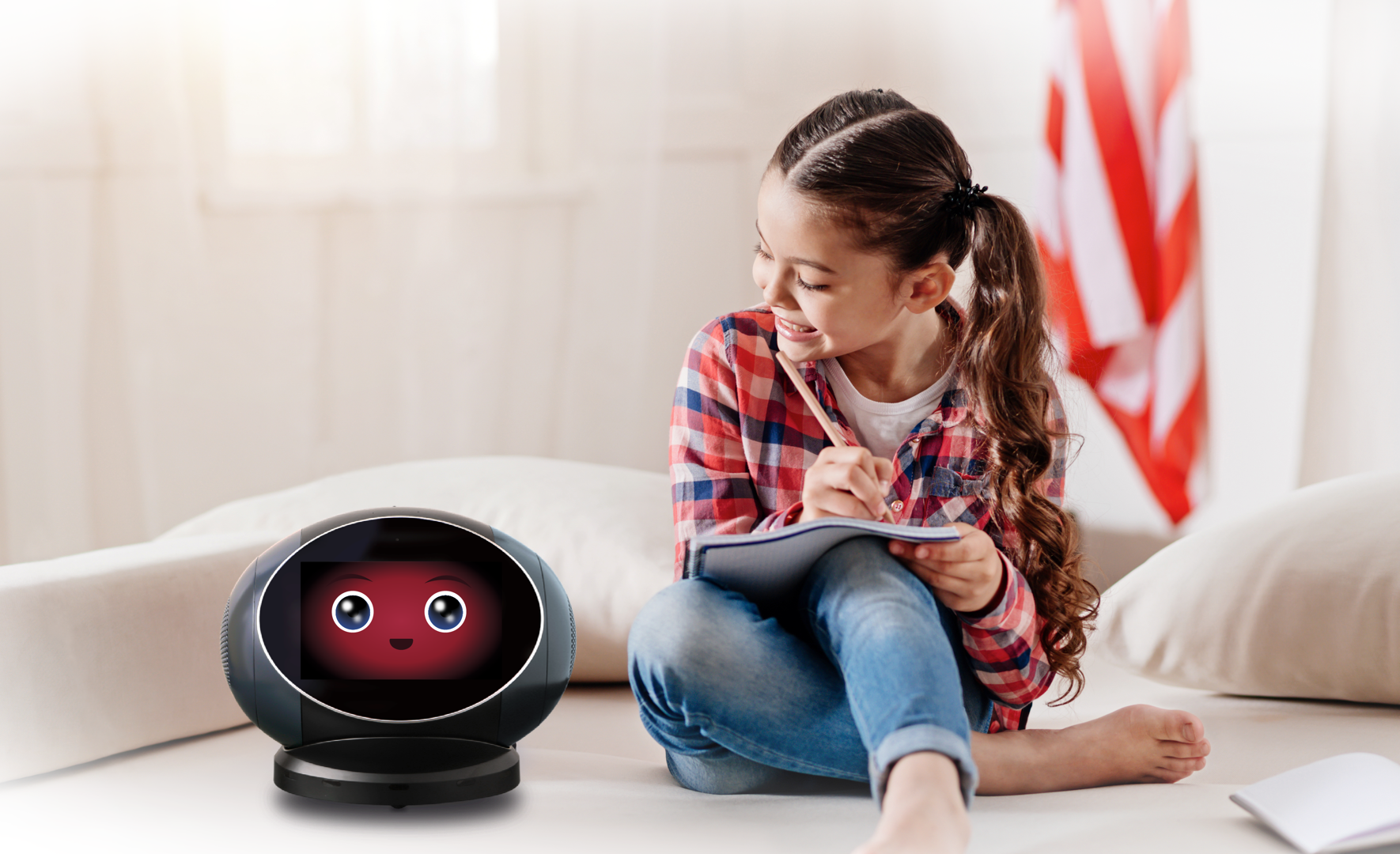
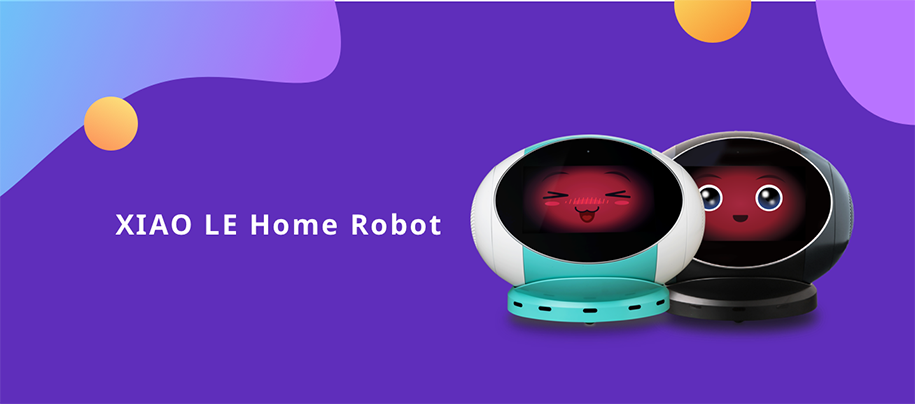
Xiao Le is a home robot designed for all smart home needs, it provides assistance, companion and entertainment with features like voice assistant, video chat, music streaming, and on-demand services. My responsibilities included market research/analysis with other UX designers, participating in VUI design, designing facial expressions, and leading a team of 5 UI designers for visual designs, website design and marketing material design.
Role
User Research, UI Design, Character Design, Web Design
Design Stage
The project could be broken into 4 stages in a two year timeline.
Research & Analysis
Brainstorming, market research, competitor analysis, personas, user story.
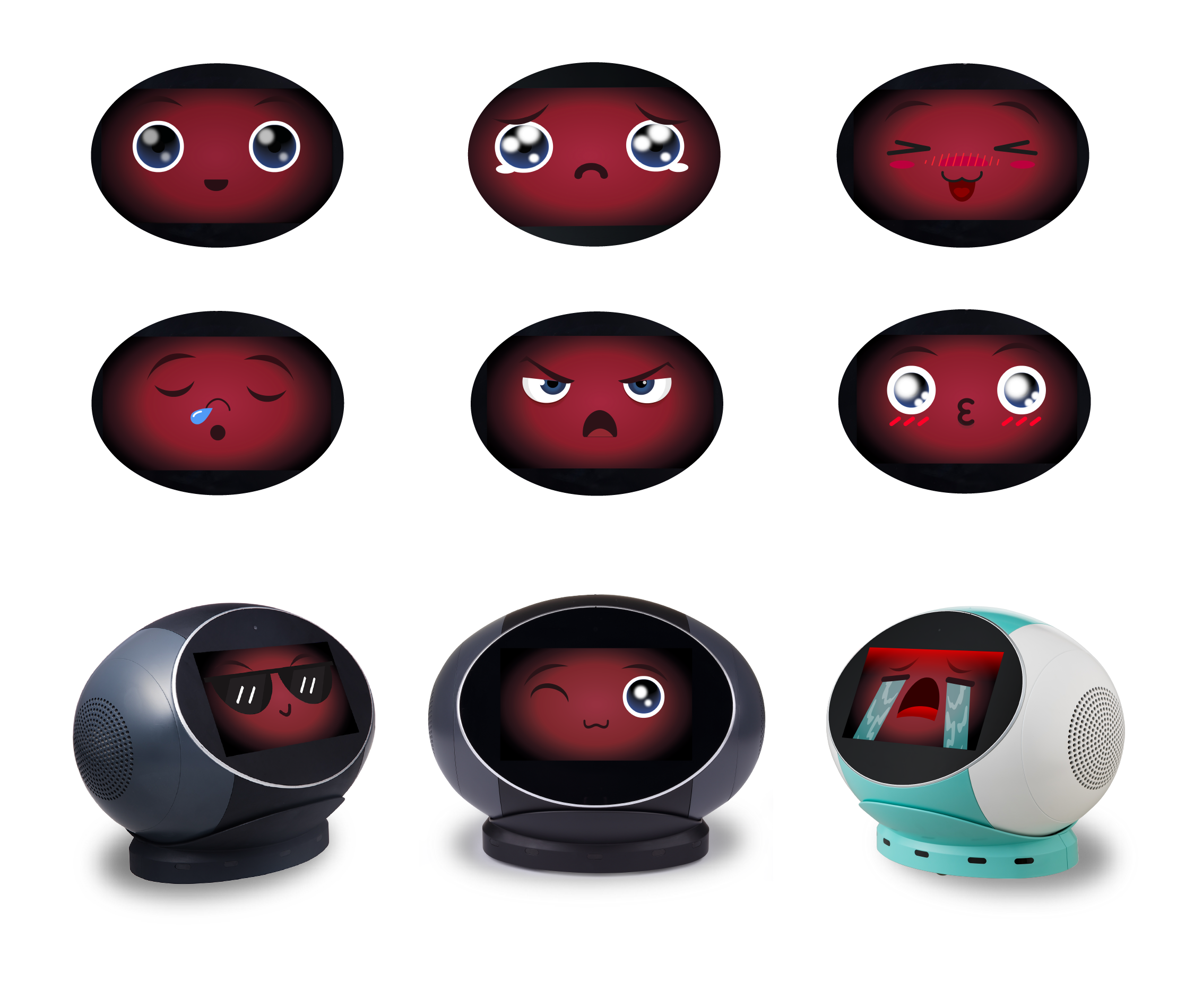
Character Design
Exploring different facial design based on different personalities.
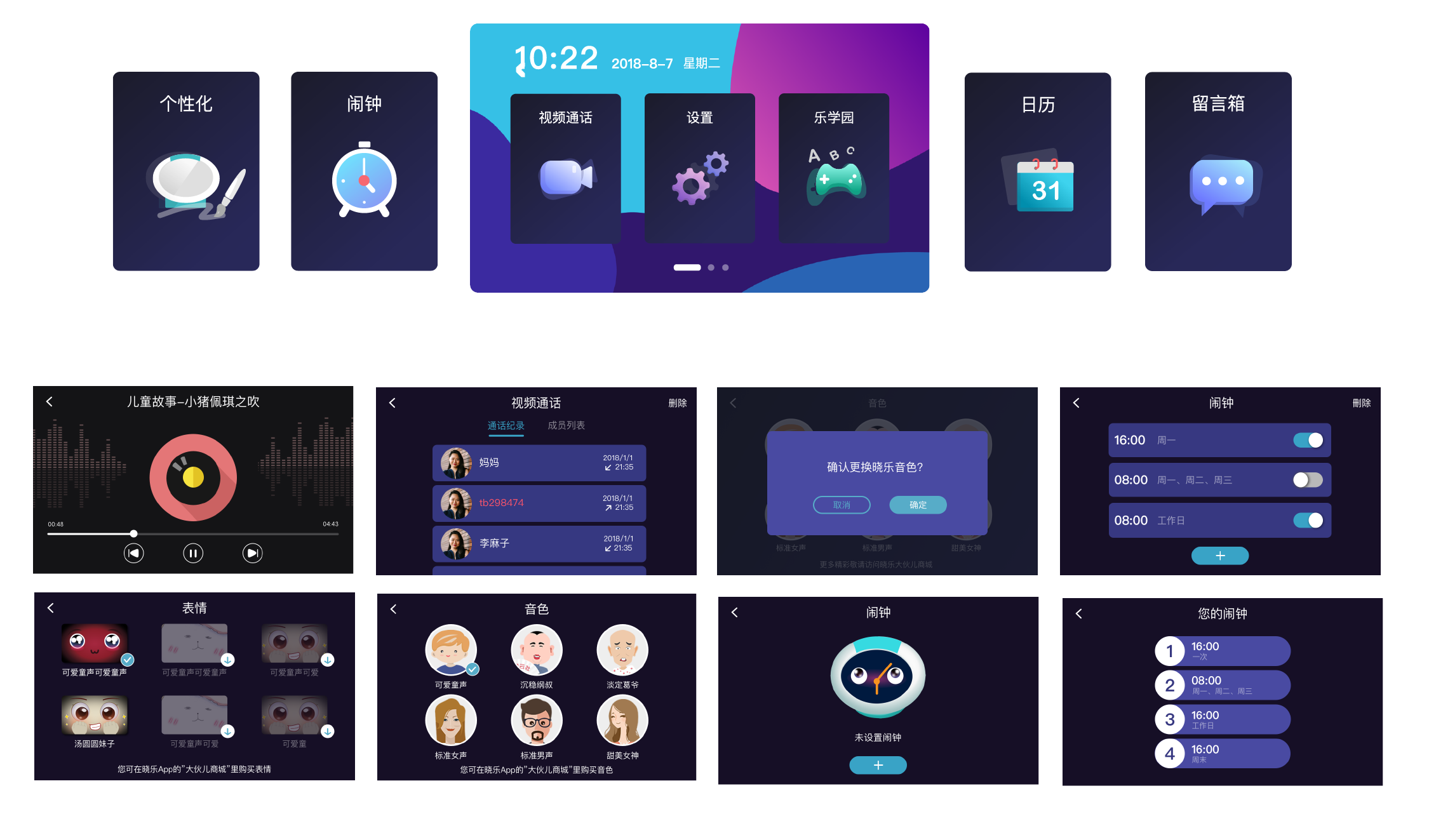
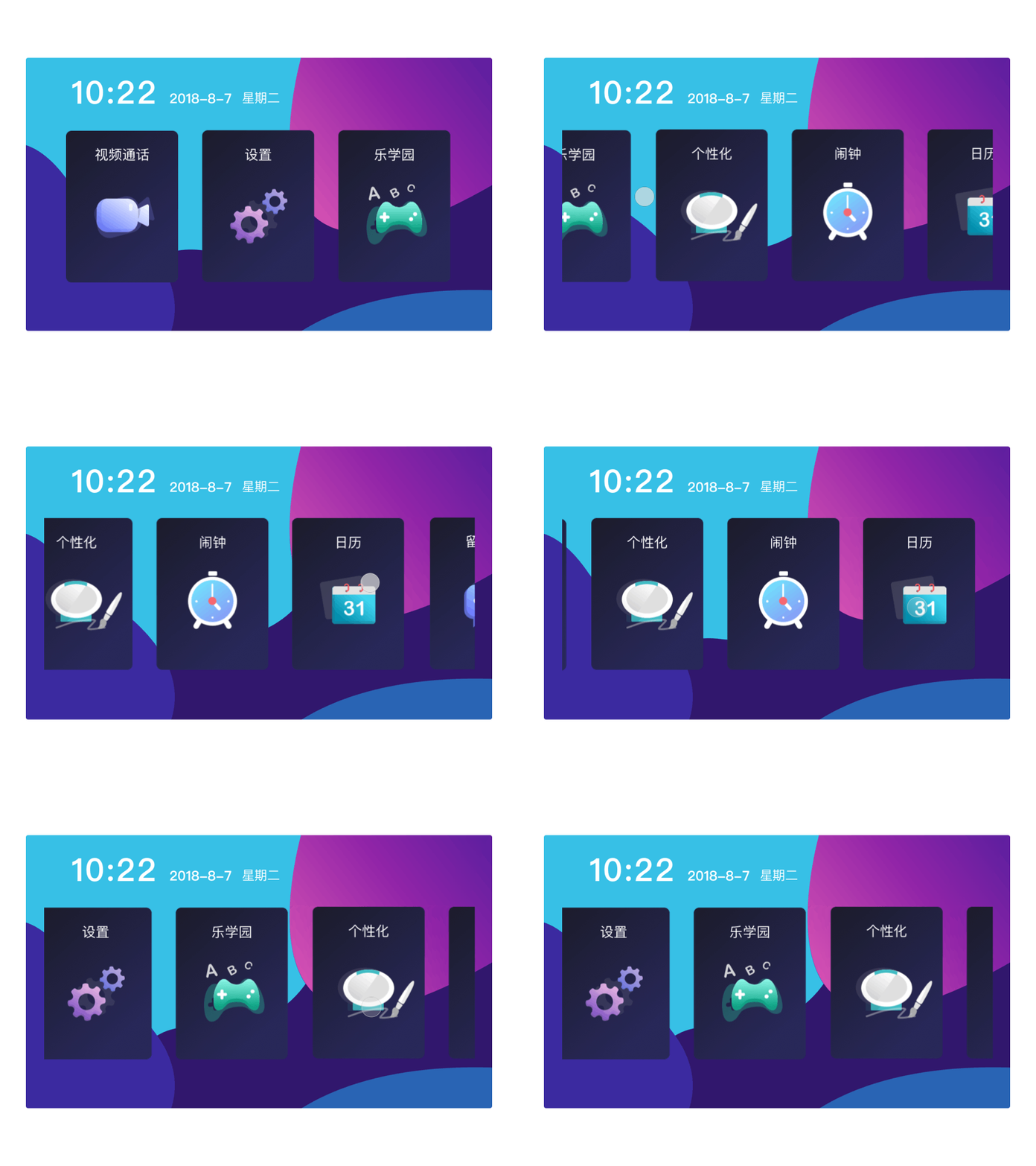
User Interface Design
Create easy and effective user interface from ideation to development with engineers.
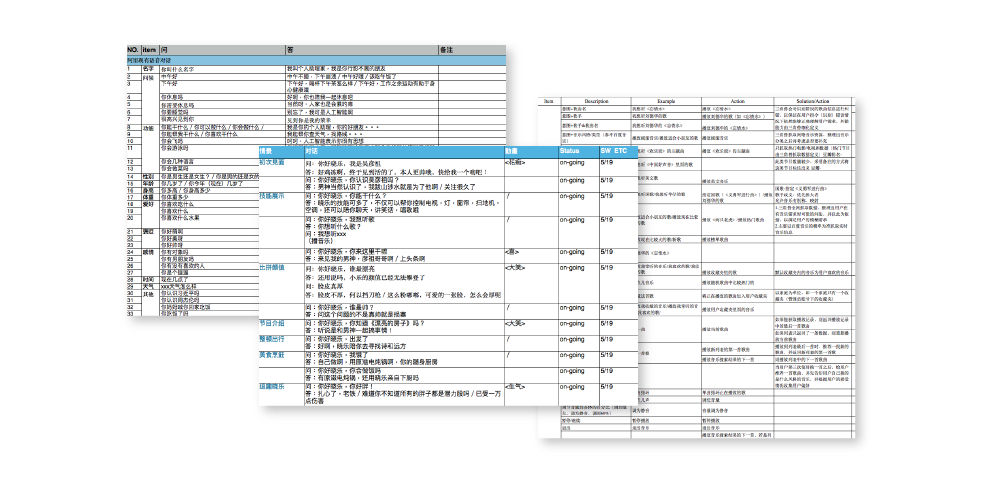
Voice UI Design
Design conversation experience with personality and humor to create human like interaction.
PHASE 1: Research & Analysis:
When the project first kicked off in 2016, our team was asked to design a home robot for Sharp China; with the required features like home IOT system, entertainment, and human-like interactions. Besides that, we didn’t have a clear purpose of how our robot is going to be. My teammates and I conducted a comprehensive market research/competitor analysis on modern day robots to gain useful insights for designing Sharp’s version of home robot. We spent a great amount of time brainstorming, discussing, on the users and the robot itself. We imagined what the robot would be like at home, what is its character, what doest it do, what can it bring to the family.
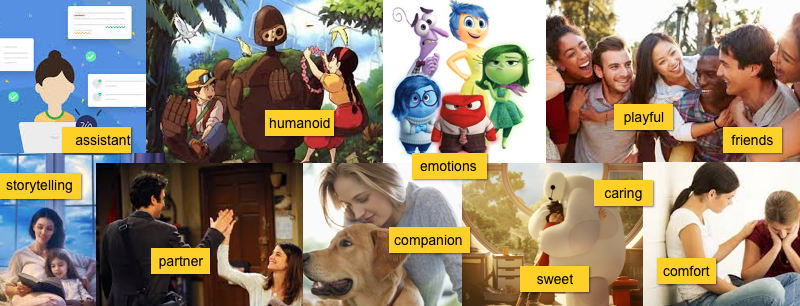
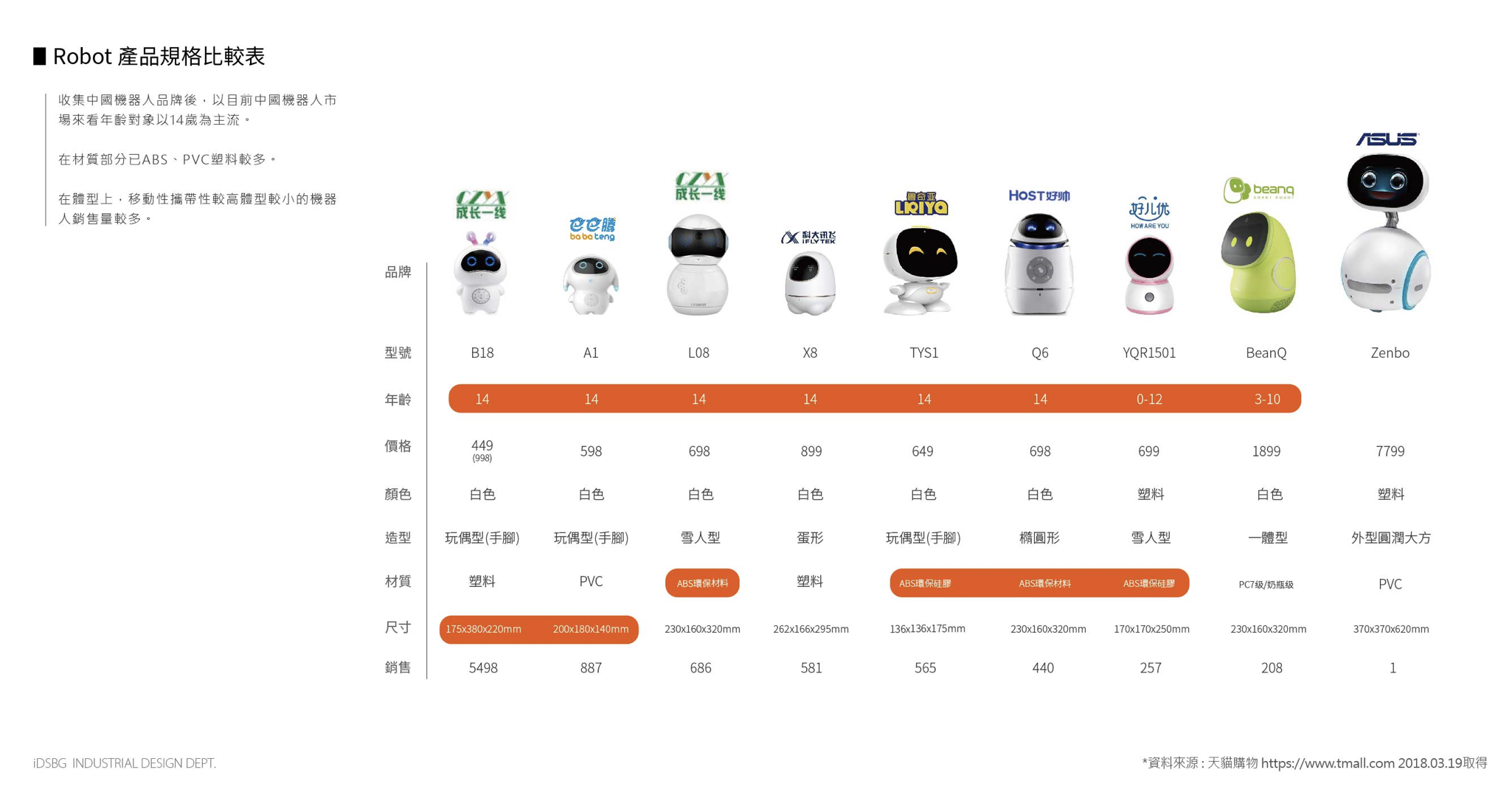
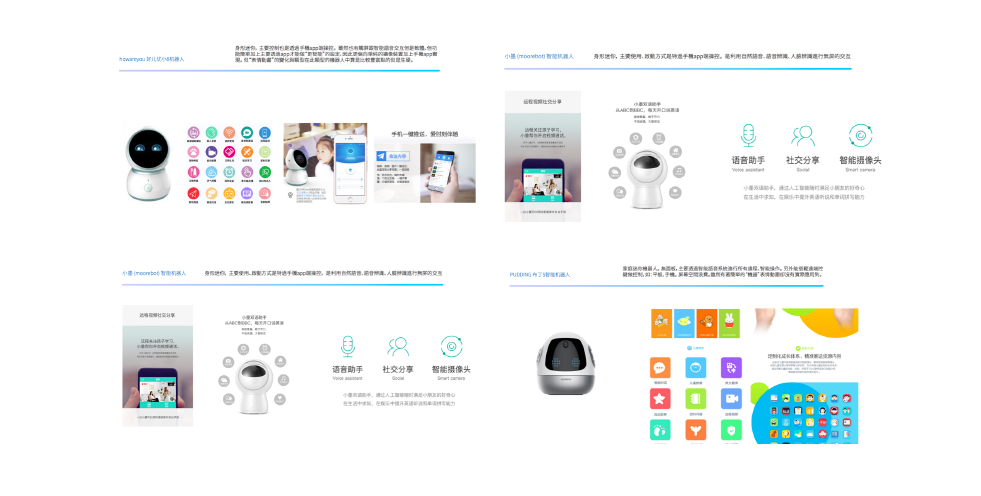
Based on the research we found:
In China, home robot can be split into two categories: home entertainment robots and childcare robots.
Video call, IOT functions, entertainment, are the basic feature of a home robot.
All robots serves the goal of companionship.
As the world's older population continues to grow, the usage of service robot for elderly has also been growing.
Childcare robots provide ways for parents to better monitor their kids in their absence, many families have difficulties on looking after children when both parents are working.
Interviews:
After the market research, we have identified our target users to kids and family, and we wanted to explore more on Childcare robots. To explore more on the topic and identify the users’ needs, we conducted five one-on-one interviews with working parents(4 females and 1 male) who have small children, by talking face to face to get an understanding of parent’s major concerns and their challenges. The conversation started broad open, we let the parents express their feelings on work-life balance problems, and tried to find out their interests and needs for their kids.
“ I feel a strong attachment between my bay and I, and i feel pain when the separation gets long. I felt missing out my baby’s life and important moments. I wish I could witness more of my kid’s growth achievements”
- Interviewee #3
“ I love my work but I also want to spend enough time with my kids. Sometimes when I get home at night or even on weekends, I have the time but I still feel stressed and tired so I don’t spend enough time accompany my kids and I feel guilty for that.”
- Interviewee #5
Personas
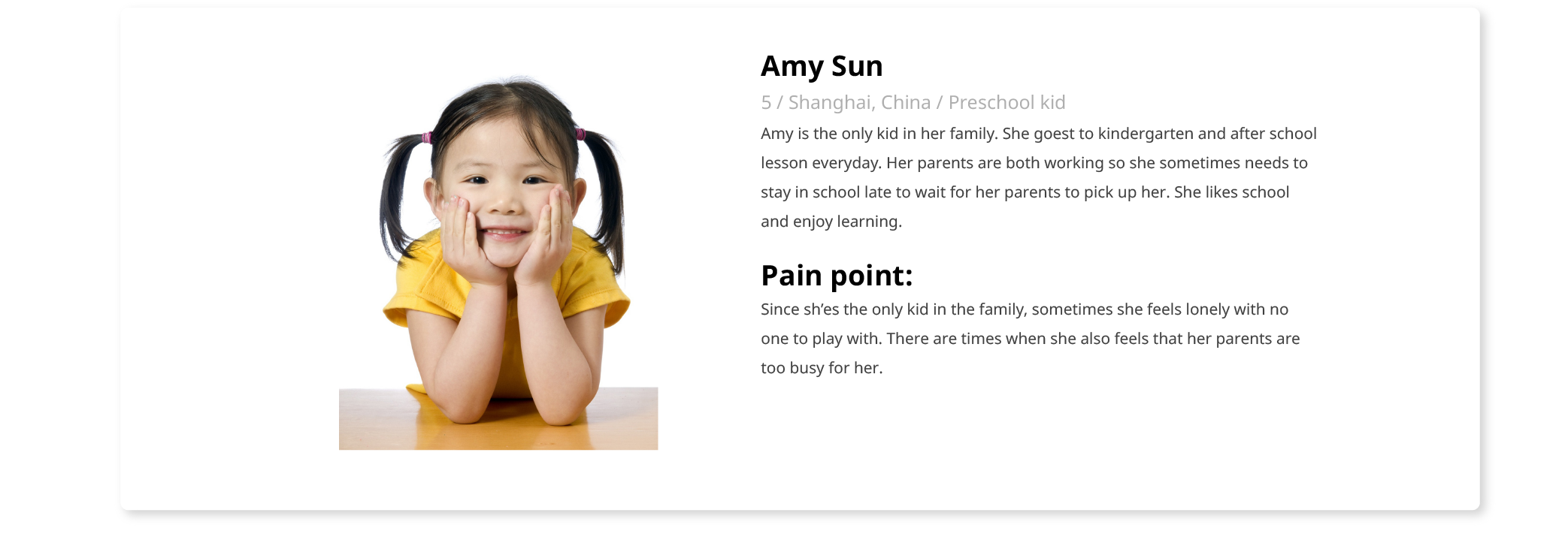
Based on interviews and research, I have narrow down to three personas.
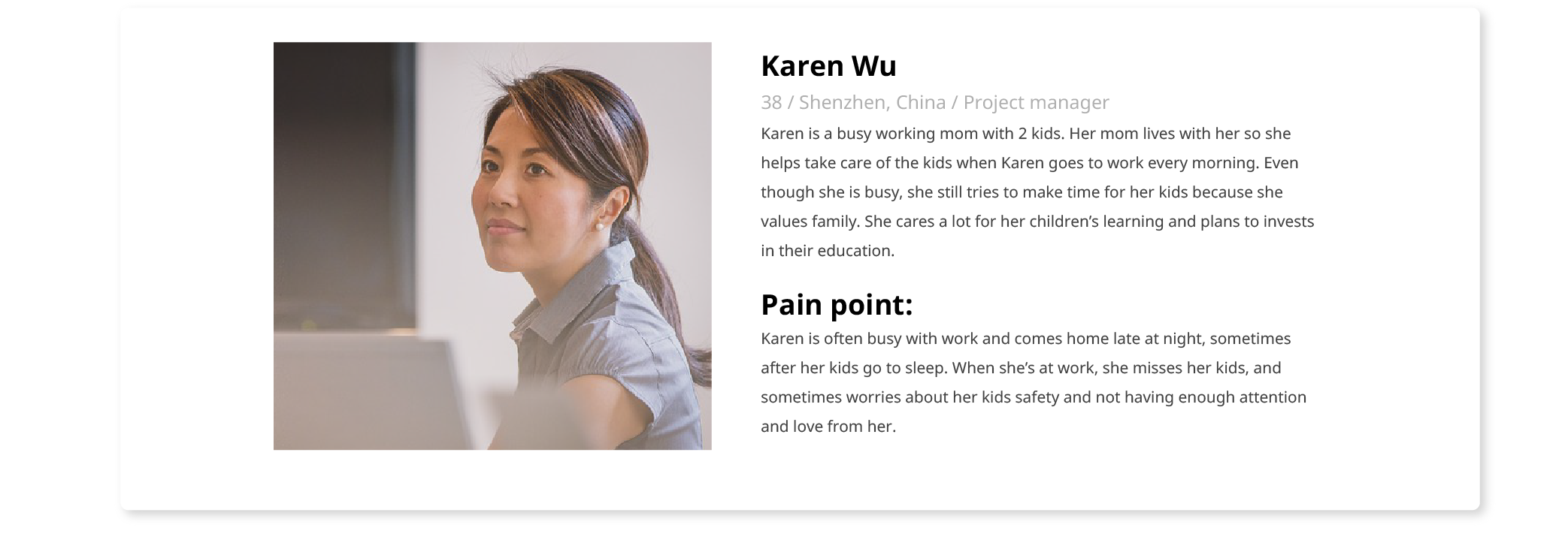
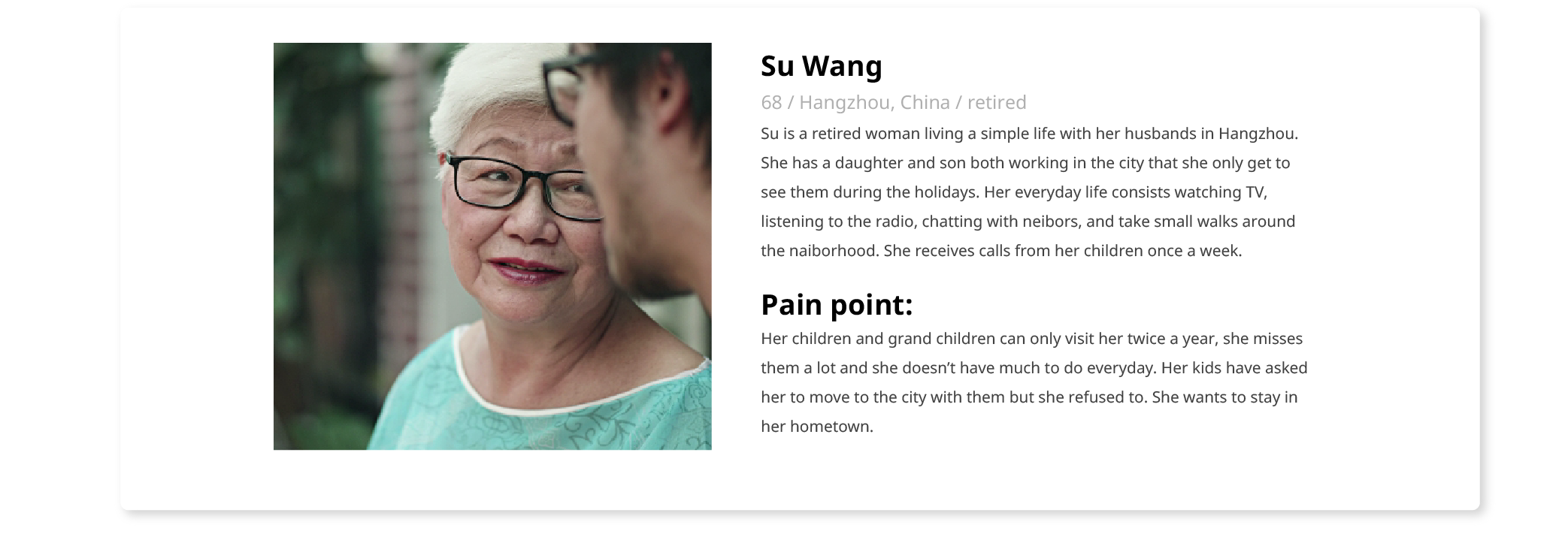
Storyboards:
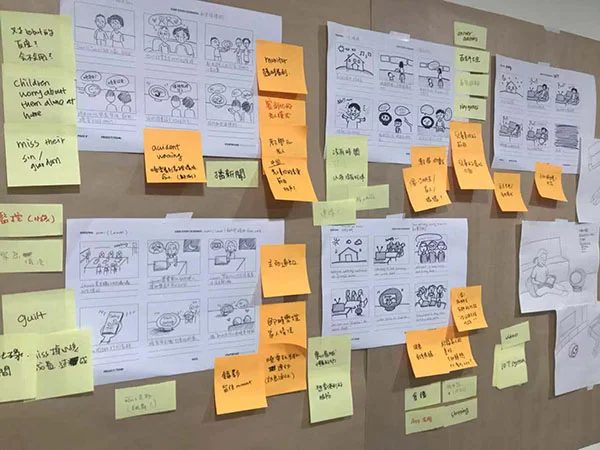
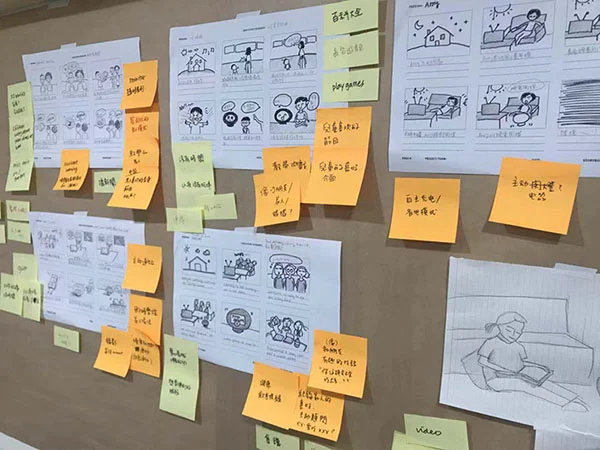
We made storyboards of how our personas would interact and go through the day with the help of Xiao Le.
Research solutions & design objectives:
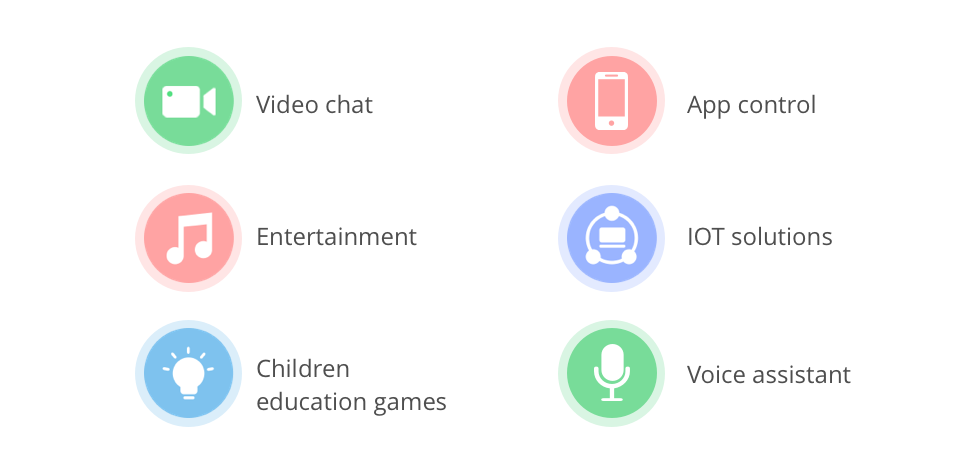
After brainstorming and discussion, concluded our research to 6 features requirements:
PHASE 2: Character Design:
PHASE 3: User Interface Design
Xiao Le is designed for kids and family so we wanted the interface to be liked by children, simple to use, and suited for family. Therefore proposed the design with vivid and colorful visuals.
PHASE 4: Voice UI Design
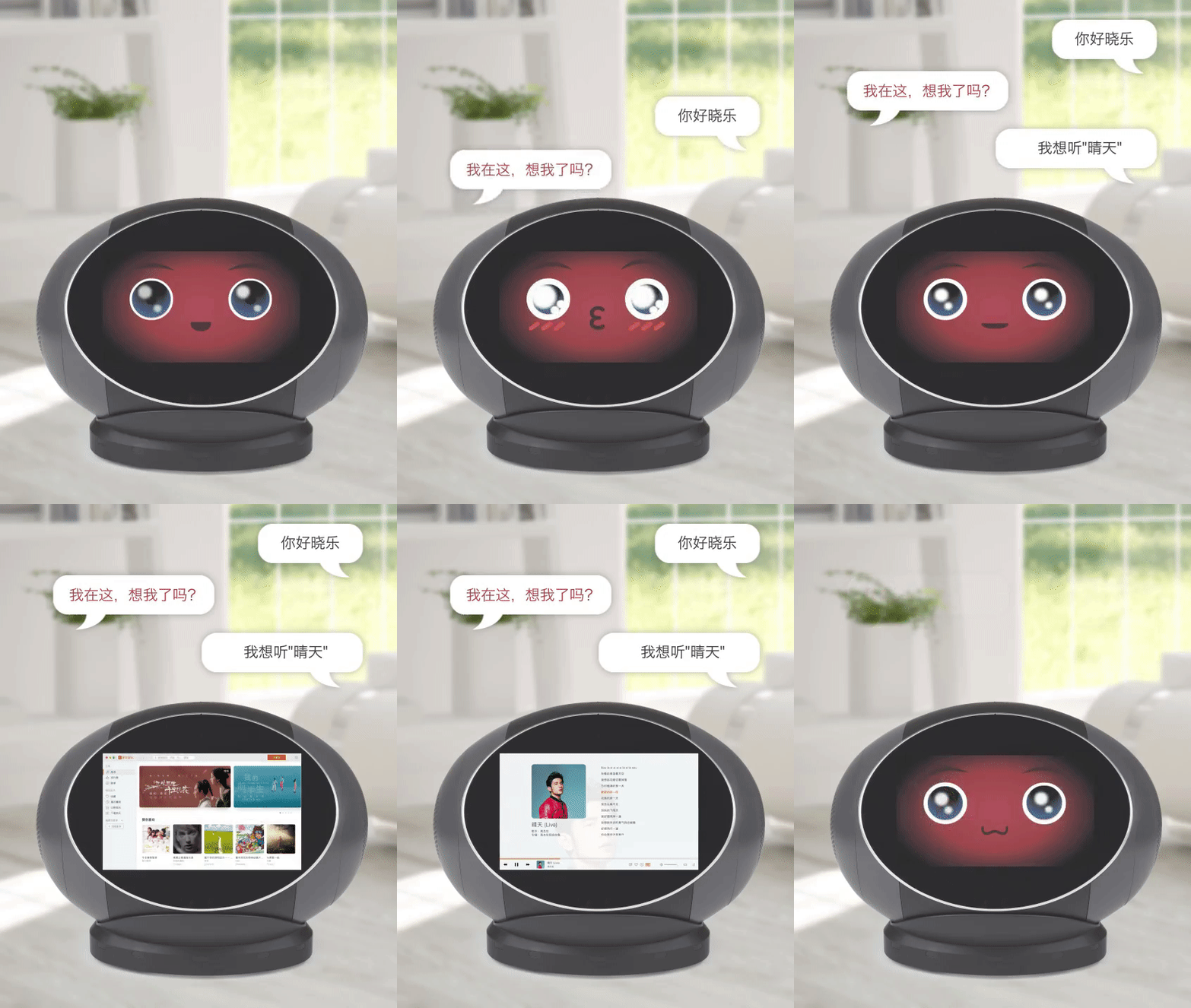
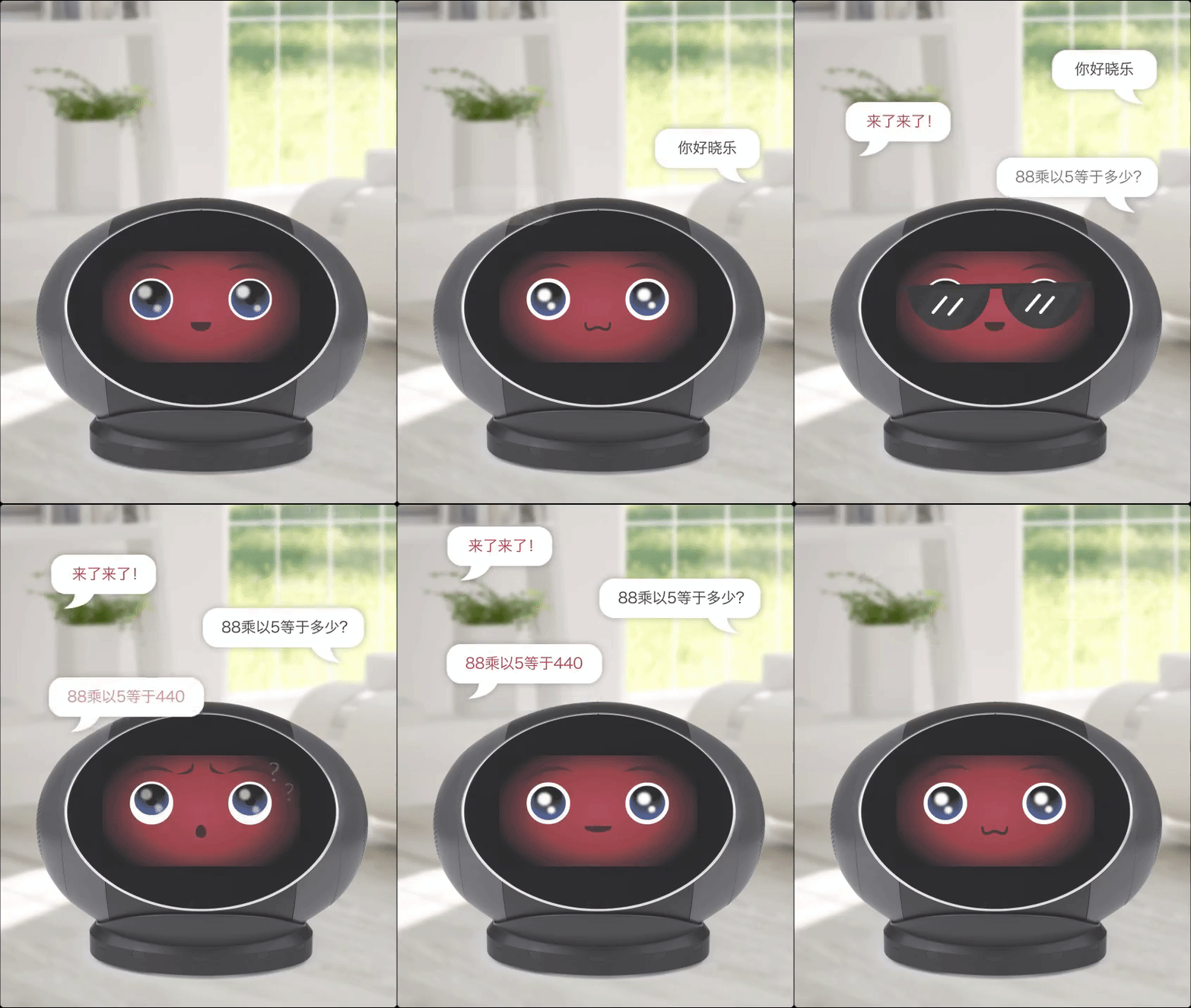
A big challenge to successfully design a home robot is to make the robot human like. We envisioned all sorts of interaction of the robot to human so the robot will fit naturally at home. We wanted our robot to be like a family member. Therefore our team spent a good amount of time on brainstorming and discussing all the possible scenarios. We design conversation experience with personality and humor to make Xiao Le a caring, love, and fun family member.
Conclusion:
Xiao Le was the very first product that I contributed developing from the beginning to end. From this experience I’ve leaned a lot from working with non designers such as the project manager, ID designers, and engineers. Working cross-functionally helped me to see the design in different perspective.
Xiao Le has been featured on a Chinese TV show in 2017(漂亮的房子), and has been gaining attention since then. Xiao Le is expected to launch in 2019.