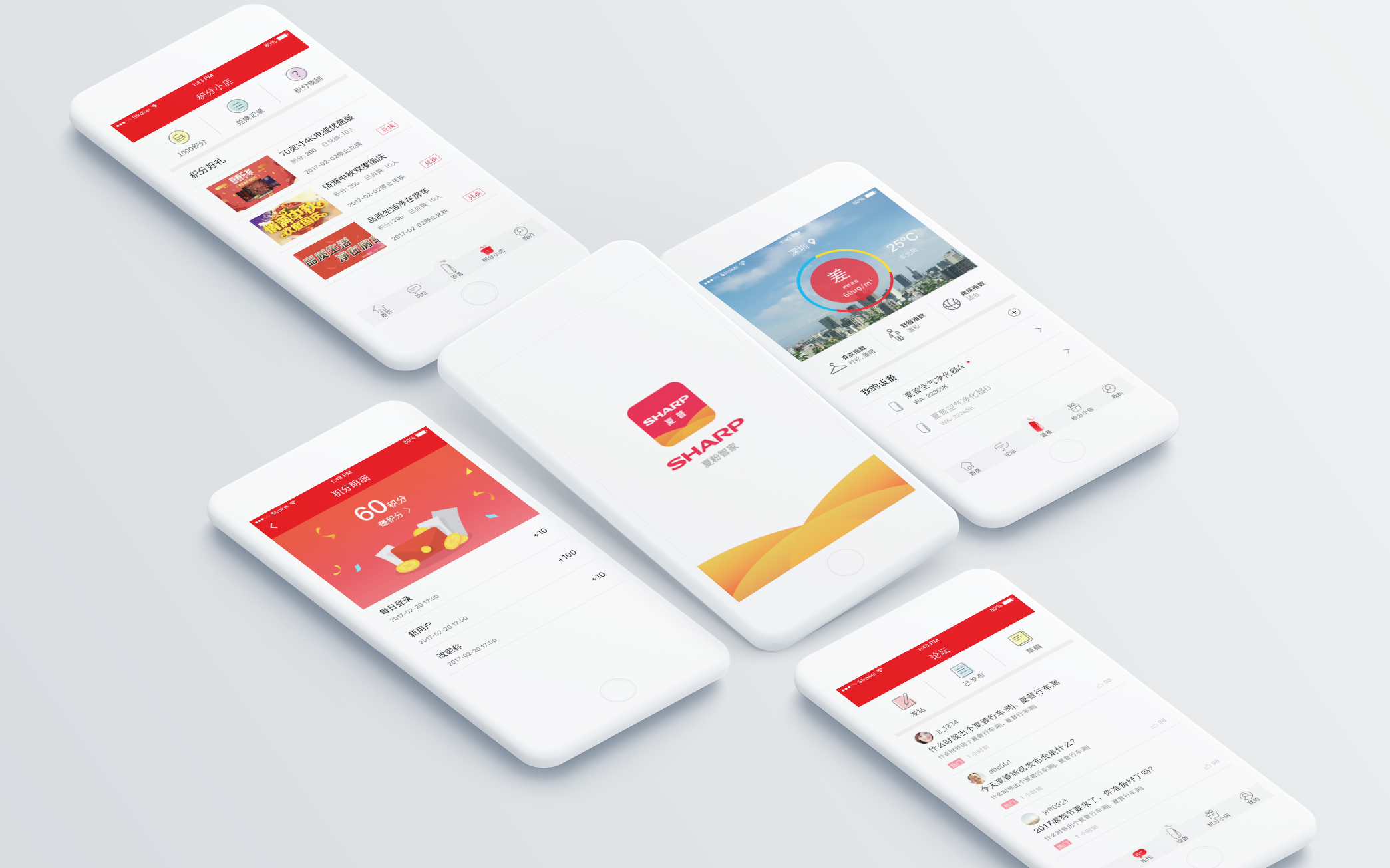
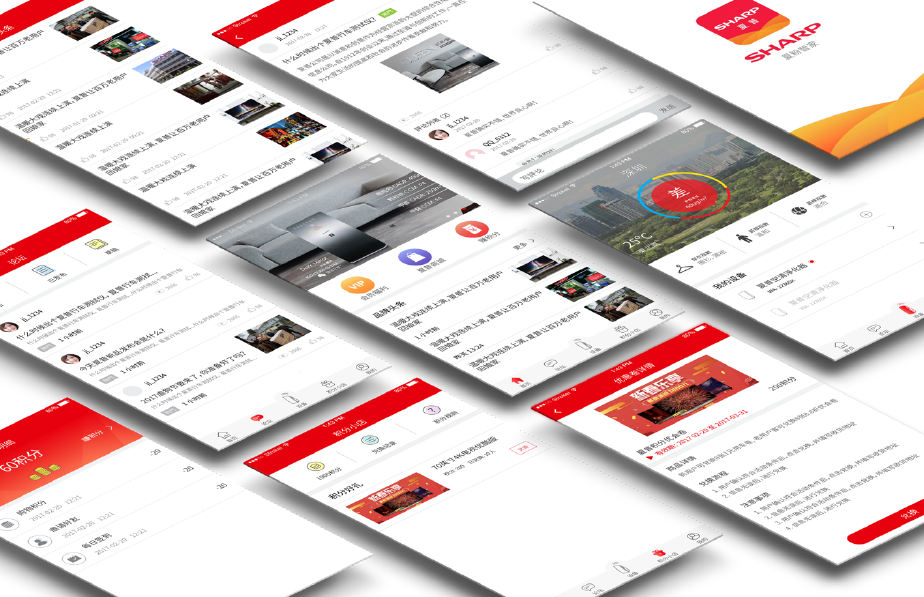
Overview:
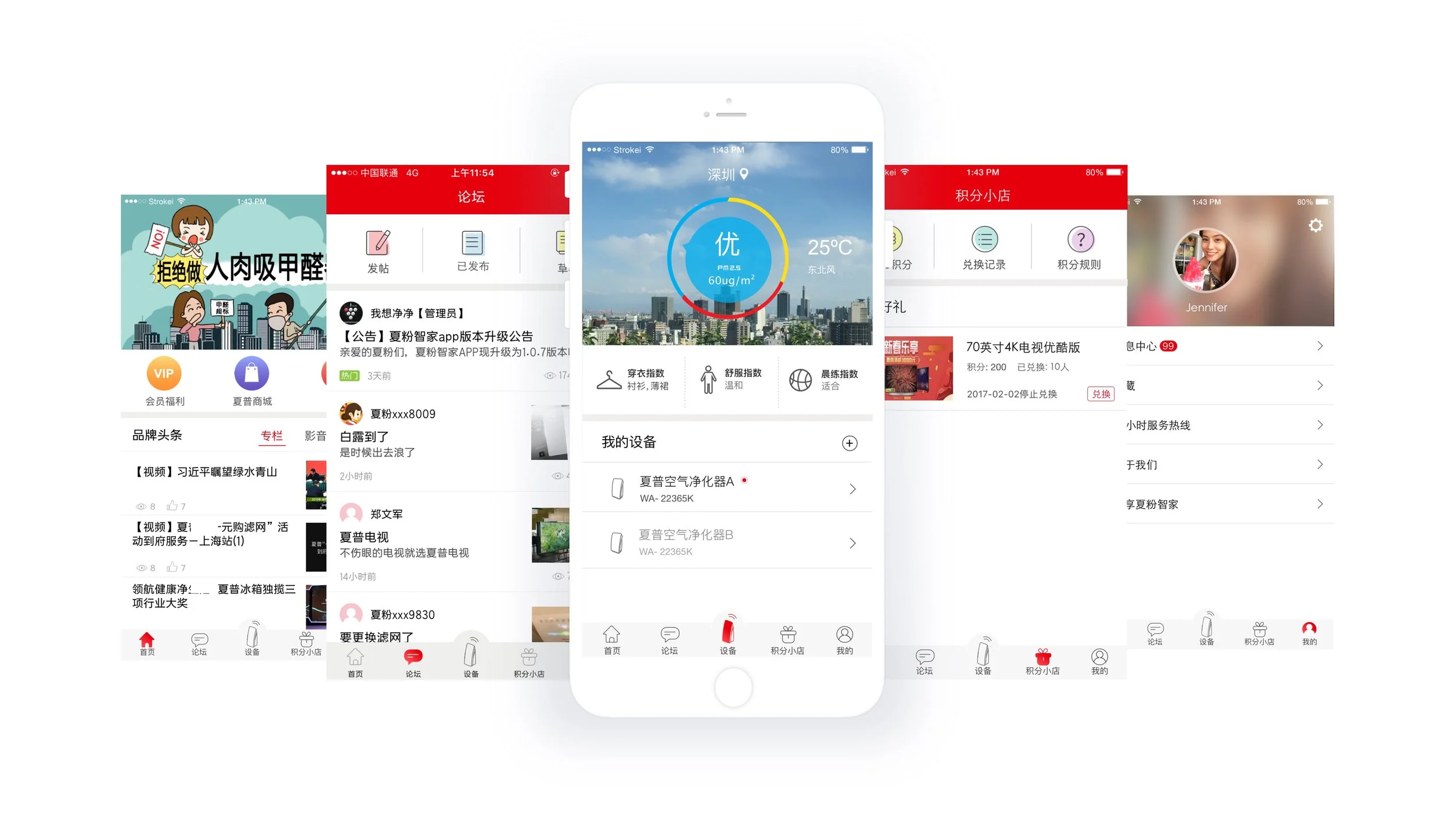
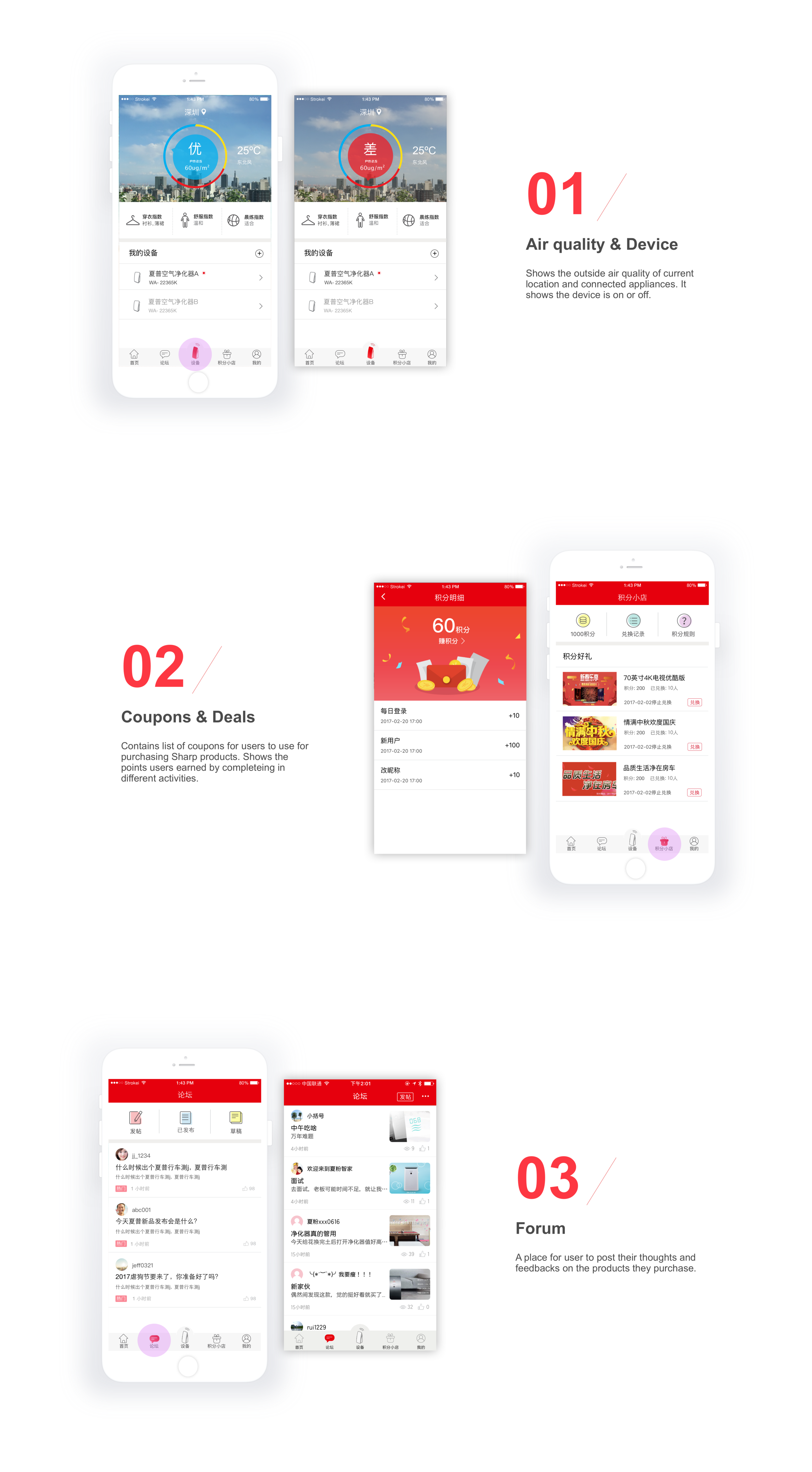
Sharp smart home app (夏粉智家) enables users to easily connect with various Sharp home appliances, including air purifier, water purifier, and smart fridge. You can monitor and control Sharp home appliances on the go and enjoy features like online shopping, forum discussion, and customer support.
Role:
UI/UX design
Timeline:
Nov. 2016 - Jan. 2017, 3 months
Introduction
In 2016, my team at Foxconn was assigned to work on various Sharp projects, including the Sharp smart home application. 2016 was the time when many IoT appliance first being introduced to the market in China, when smart home solution became the hottest topic in tech industry, Sharp electronic, was one of the leading company providing smart home solutions in Asia.
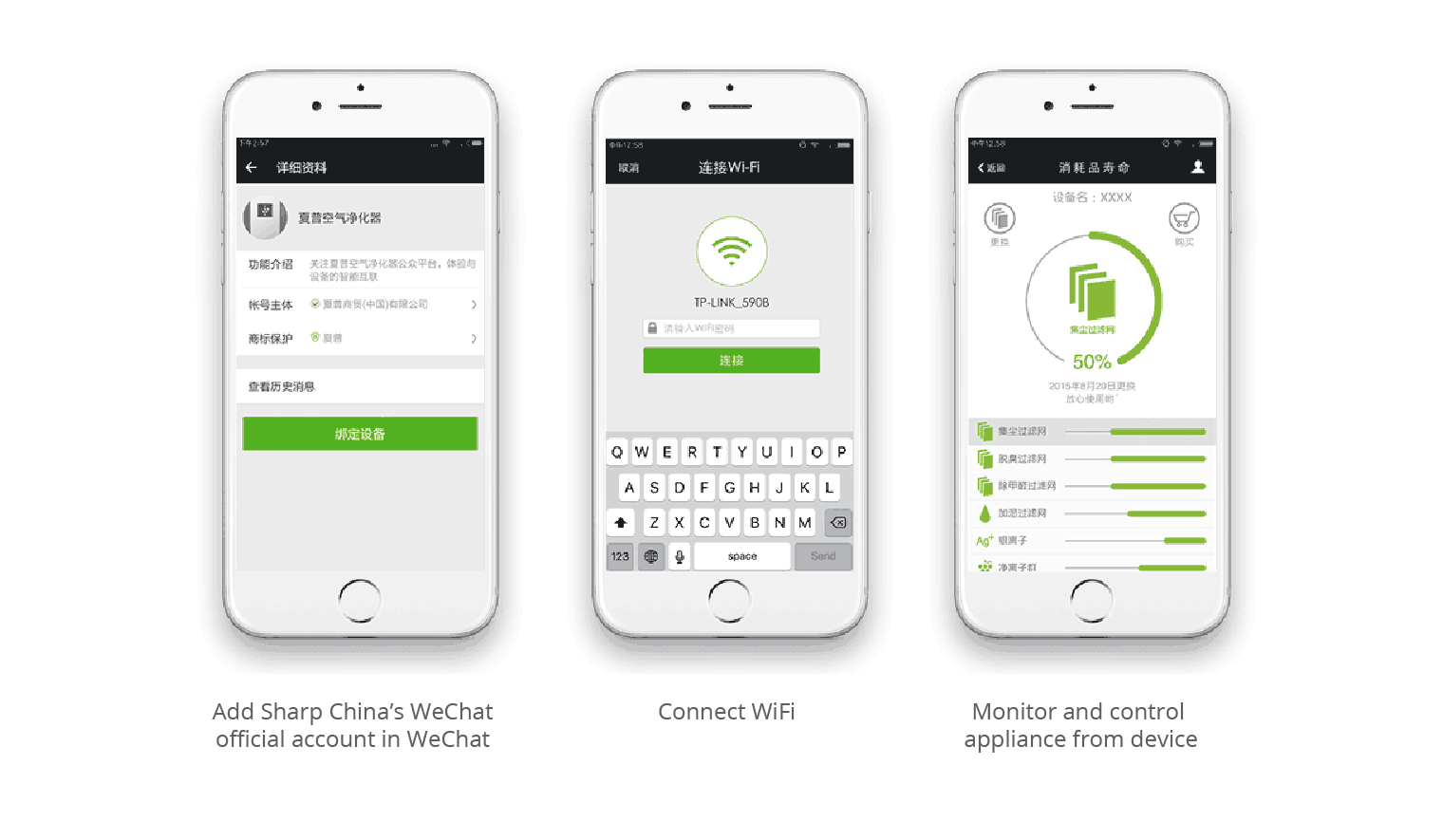
Sharp has a large collection of white electronic goods and many of them are IoT enable. Prior to this project, there wasn’t a single app to integrate all these appliances. The platform for controlling Sharp IoT appliances was WeChat’s mini program, the sub-application allowed users to connect and control to their home appliances via WeChat.
OBJECTIVE
To design a native app for Sharp China.
To create a smart home solution for users to control all their Sharp appliances remotely.
To build a Sharp exclusive community, a platform where Sharp users can ask questions, get the latest news on Sharp products, and more importantly, a place for us to promote our brand and products.
Business Model
Before we started our research, we spent some time speaking with the members from Sharp Japan to learn more about their company and brand philosophy. We were especially interested in knowing more about their vision on smart home solutions. After speaking with them, we had a much better understanding on their business model.
Sharp’s goal is to build a people-oriented world of products and service through IoT.
“Every day in their homes, people use a variety of home appliances and IT devices.”
”At Sharp, we’re making these appliances and devices people-oriented and user-friendly by connecting them to the cloud and giving them AI capabilities.”
”AI can learn people’s routines and preferences and thus provide them with appropriate services and suggest ways to use products. Appliances and devices are thus optimized to the needs of each individual.”
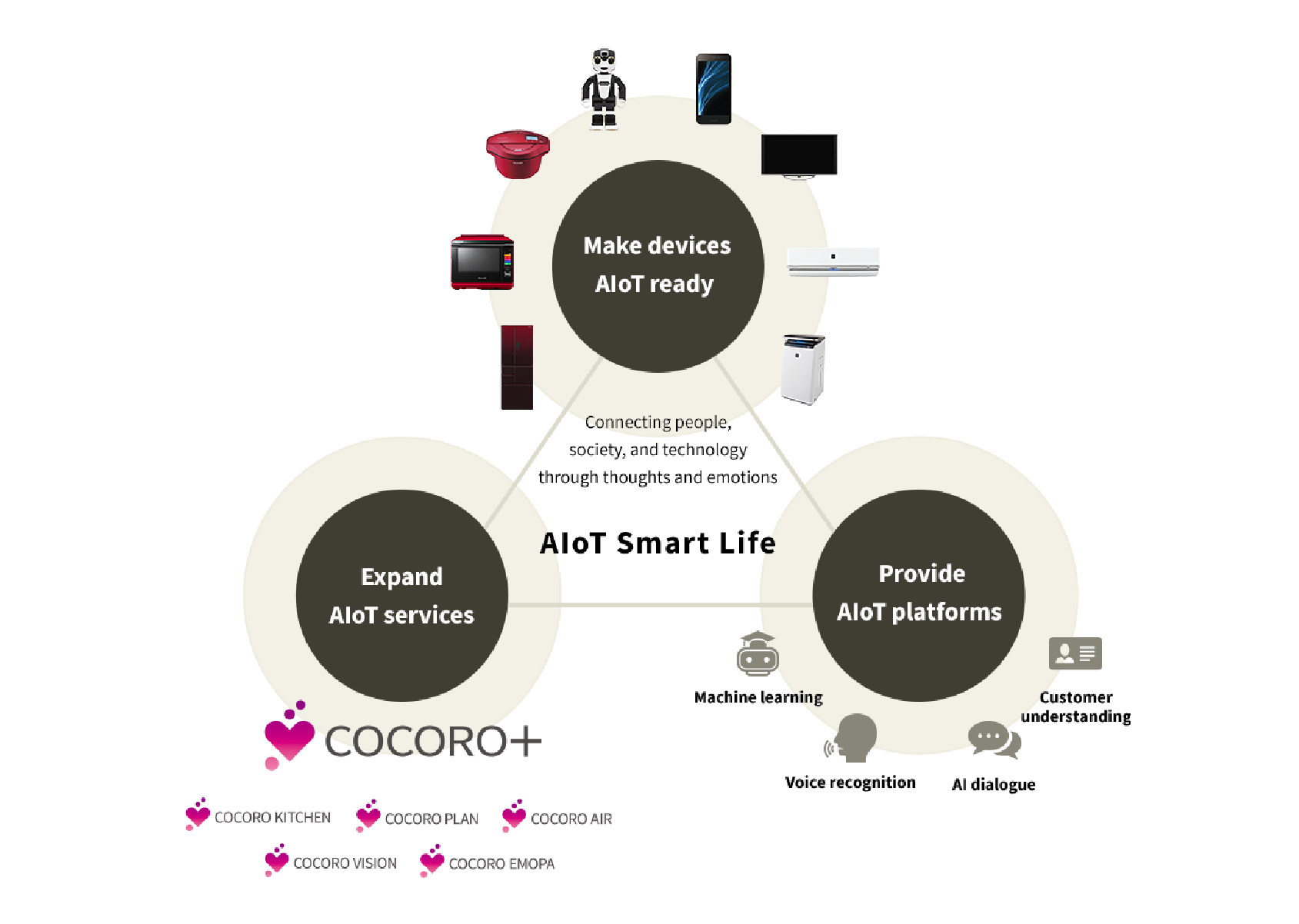
Sharp strives to achieve what they call “the Smart Life” in three ways: by making devices AIoT ready, by expanding AIoT services, and by providing AIoT platforms. )
Competitor Analysis
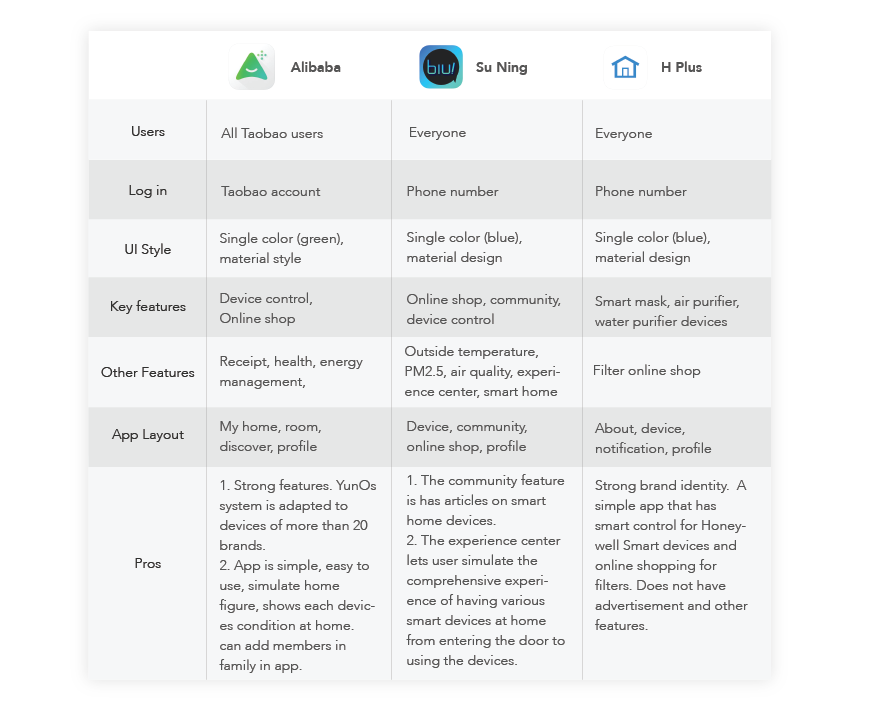
We then started reviewing the existing app and analyze the competitors, and get familiar with existing IoT Apps on the market. By doing this we were able to get an idea of which features were expected in a smart home app, common design trends and users thoughts.
eCommerce apps in China
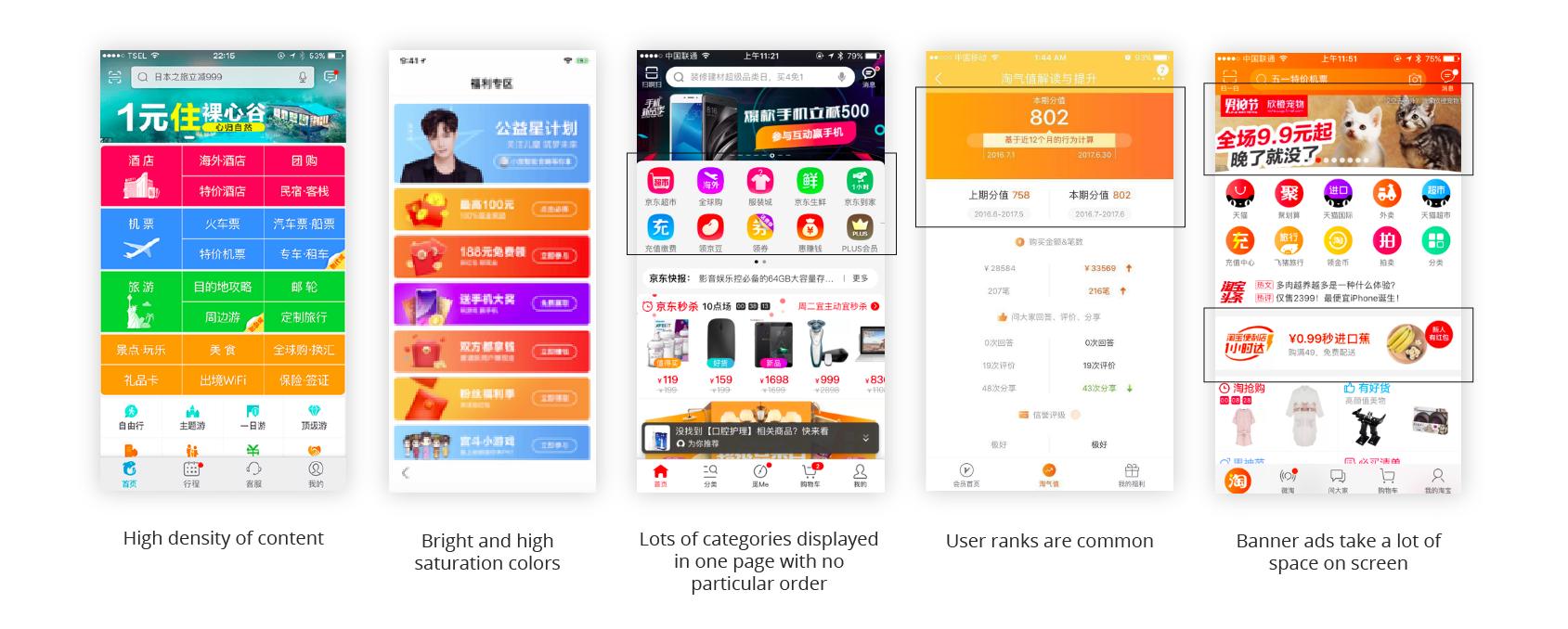
Besides smart home apps; we also looked into eCommerce and forum apps in China to find common patterns and address user problems. After researching and brainstorming, we listed some key insight for our design:
Chinese users are used to reading high density of content on mobile. They are able to consume heavy information in one screen.
Chinese apps use bright and high saturation colors. Icons are always colorful and vivid.
In terms of the IA of the apps, there are a lot of categories displayed in one page with no particular order.
User ranks are common in Chinese social and eCommerce app, users have to do activities like checking in or sharing post to earn points to earn a higher membership status.
Banner ads take a lot of space on screen, many apps uses these ads to drive brand awareness and sales on the app homepage.
Interview
After doing research on competitor and Chinese eCommerce UI trends, we then conducted interviews on potential target users. After research, we had a clear vision of target audience in mind. Therefore we conducted 8 contextual interviews with 20~30 years olds and analyzed results to better understand their point points and needs. We tried to understand: 1. their experience with their home appliance, 2. what they expected to have with smart home solution, 3. what are their online shopping habits and 4. how satisfied are they with the after sales service?
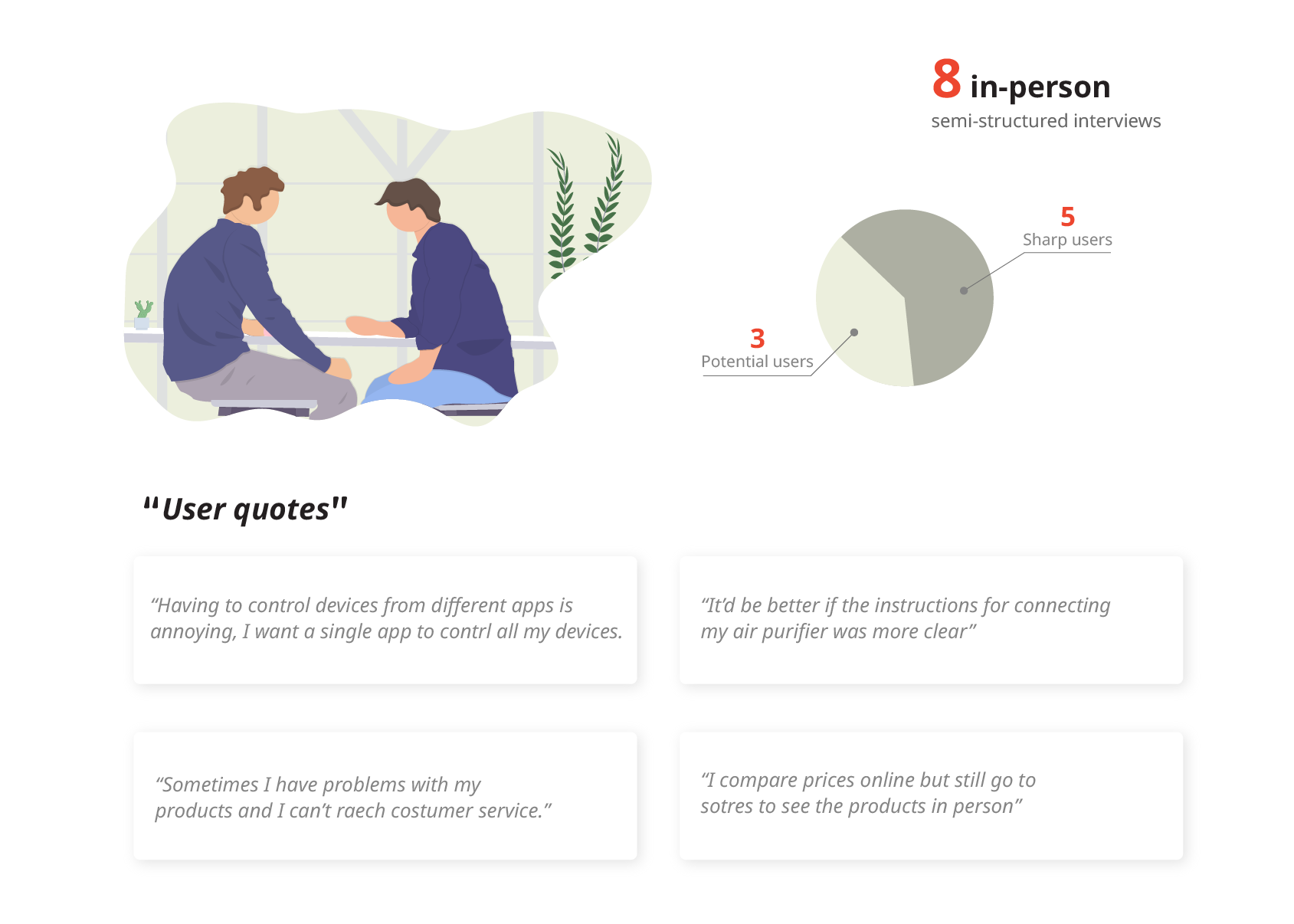
Summary of findings from interview:
The instruction on connecting a device should be easy and straight forward.
User want an ecosystem that required less effort and manual operation.
Some people still prefer to buy home appliance in store rather than shop online.
A good shopping experience has to do with the after sale and product maintenance service
Personas:
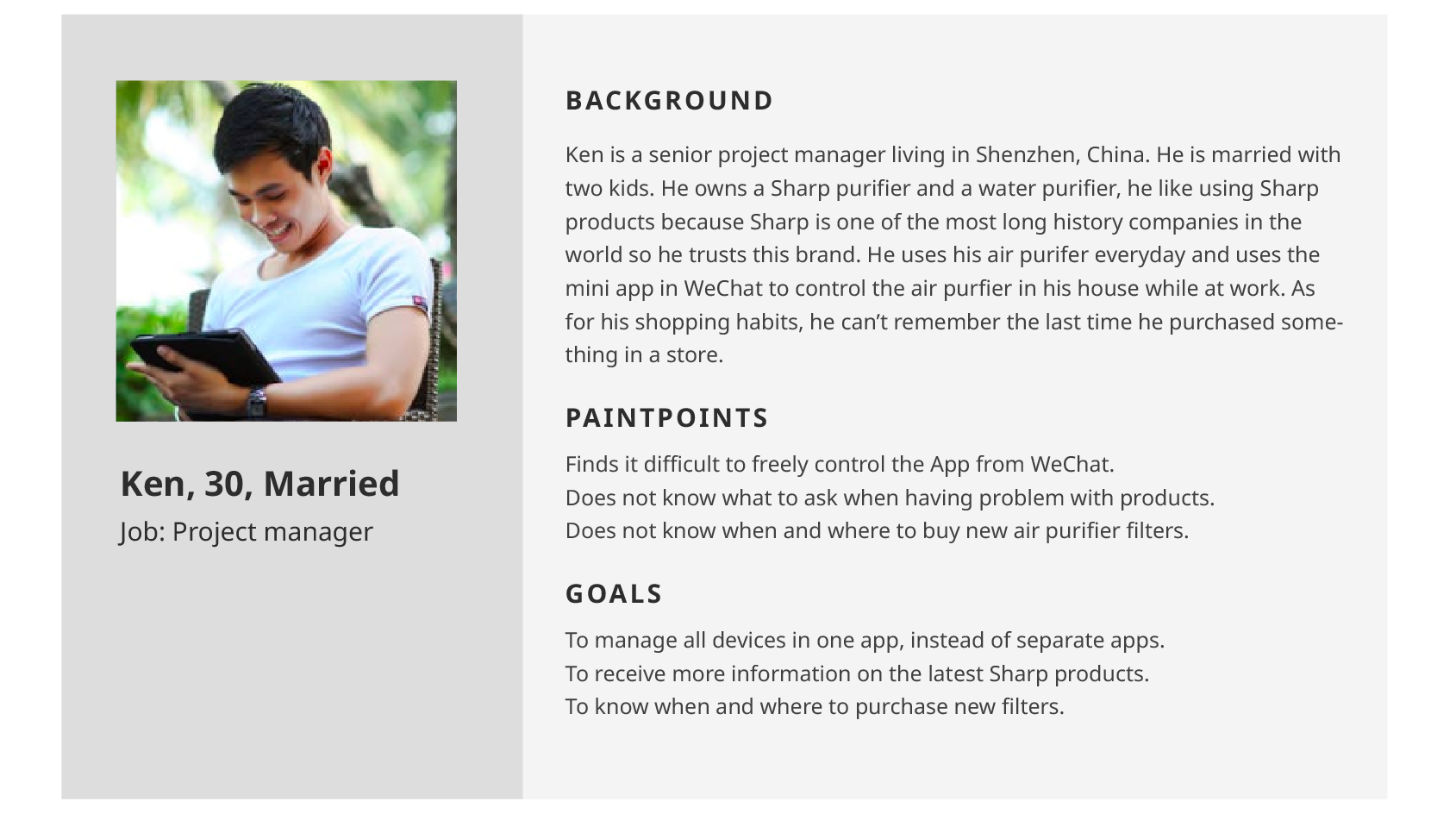
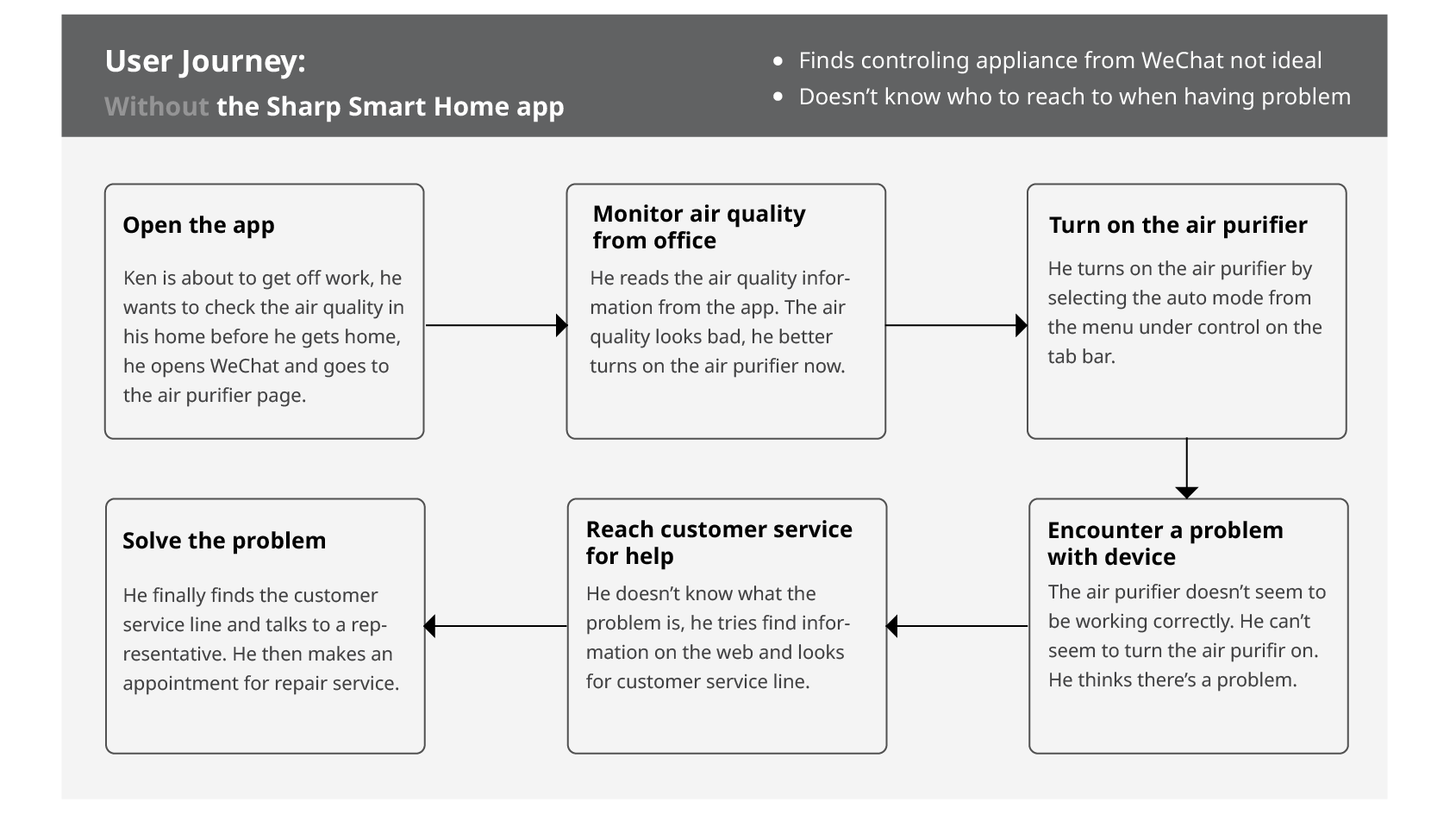
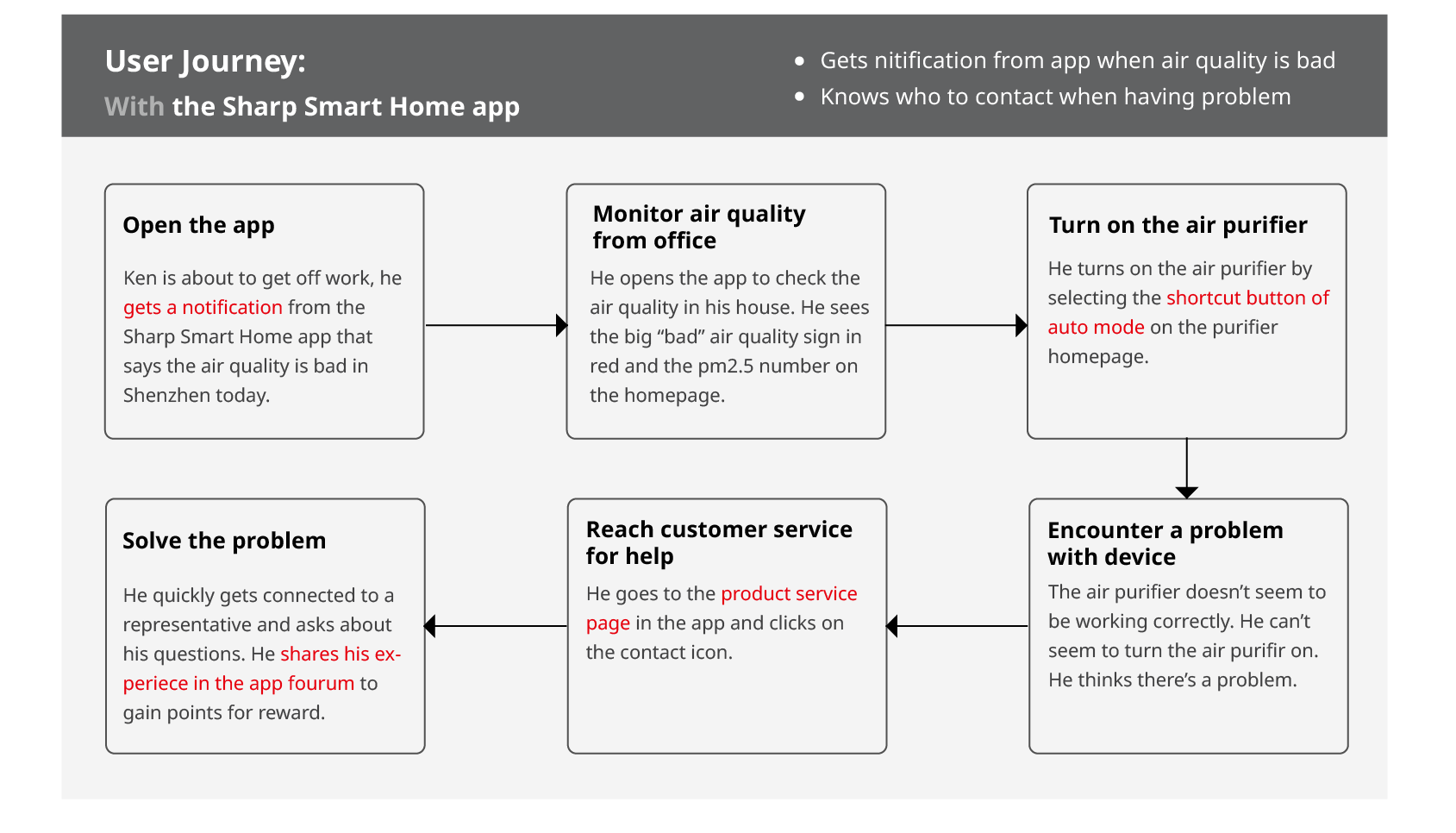
Base on our research data, a persona was created to represent a Sharp user. We also created two user journeys to portray how he would interact with and without this app through different stages.
key features
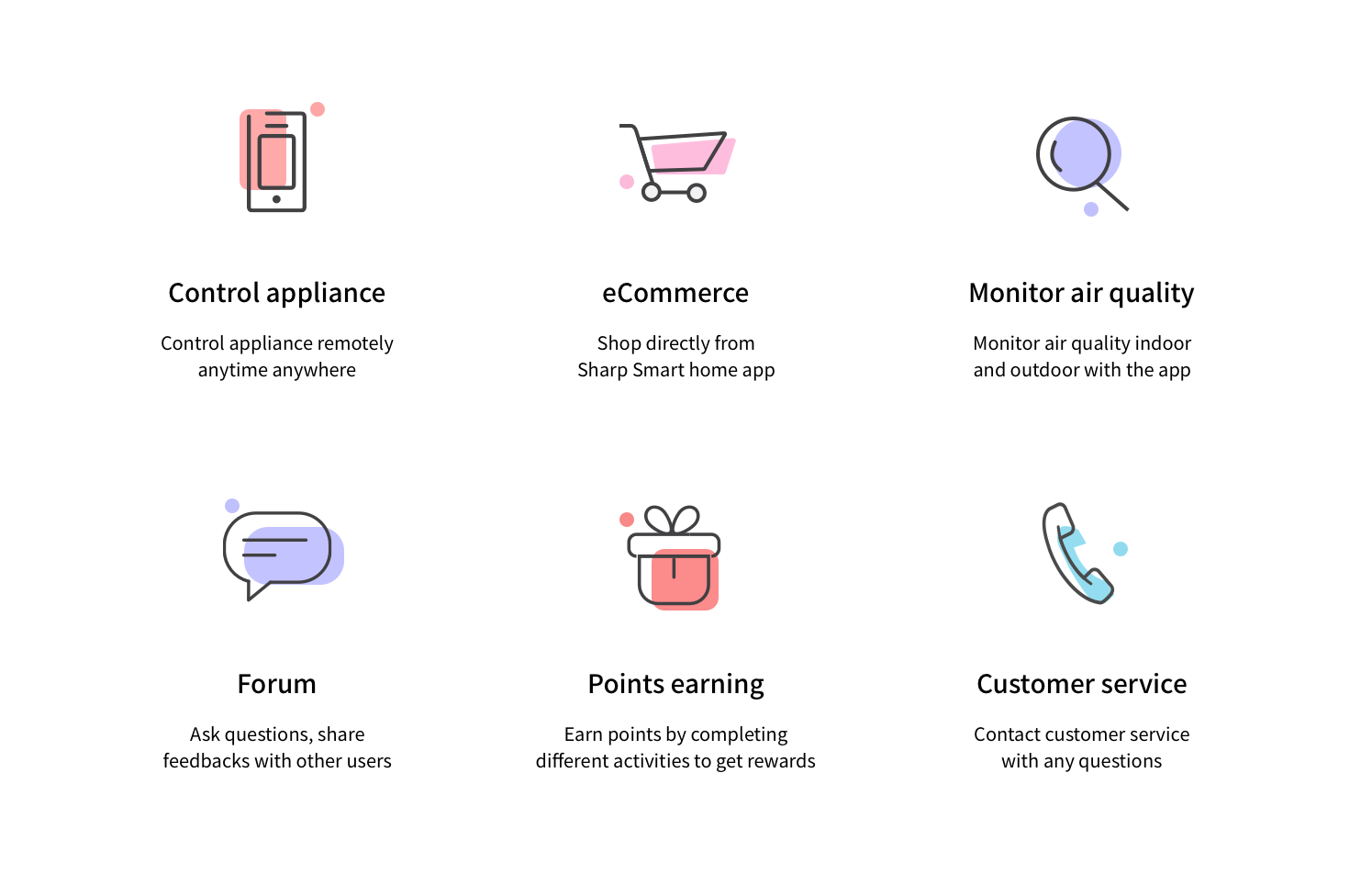
Base on our user research insights, we established these key features:
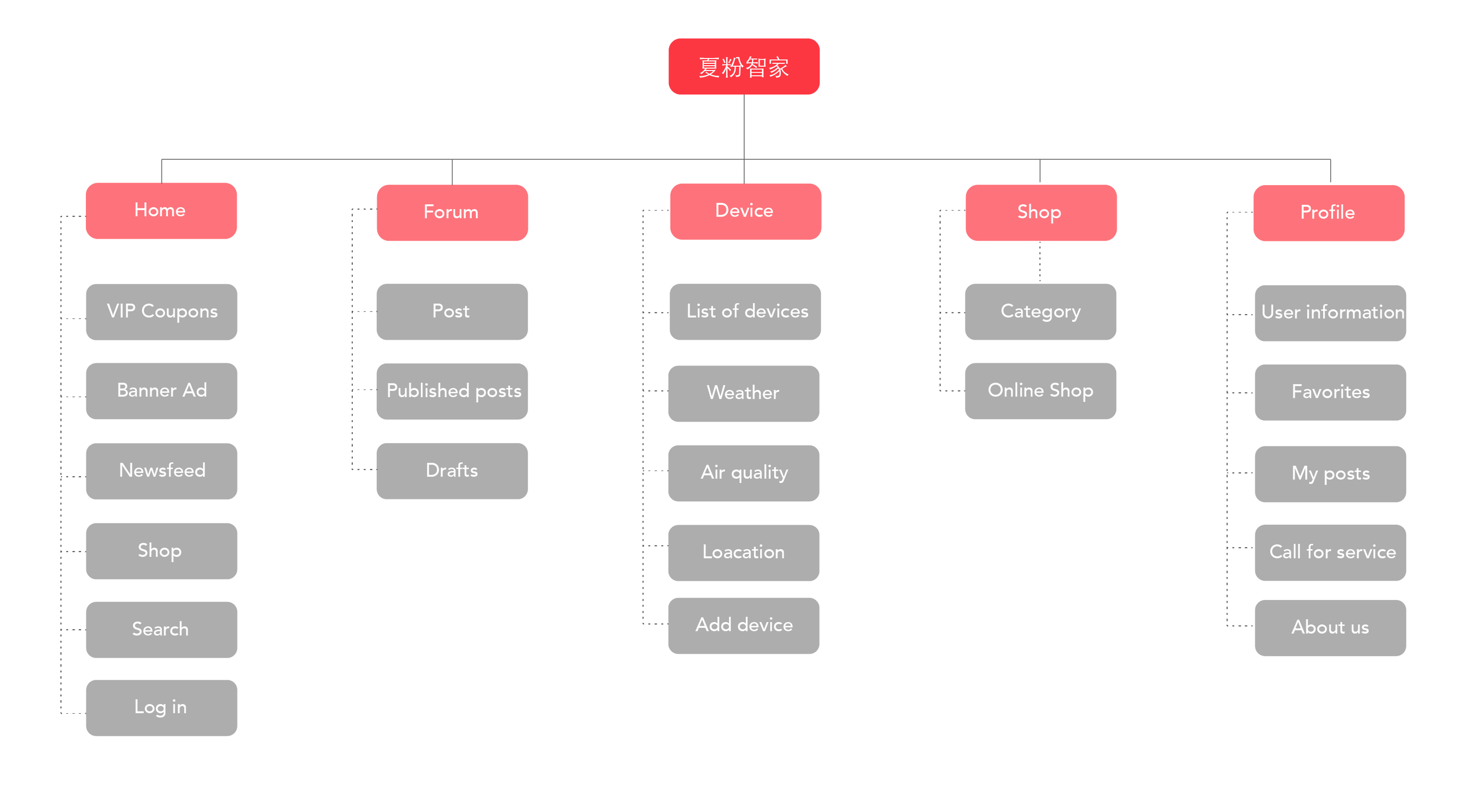
Information Architecture:
Wireframe:
I then developed wireframes to visualize the task flows.
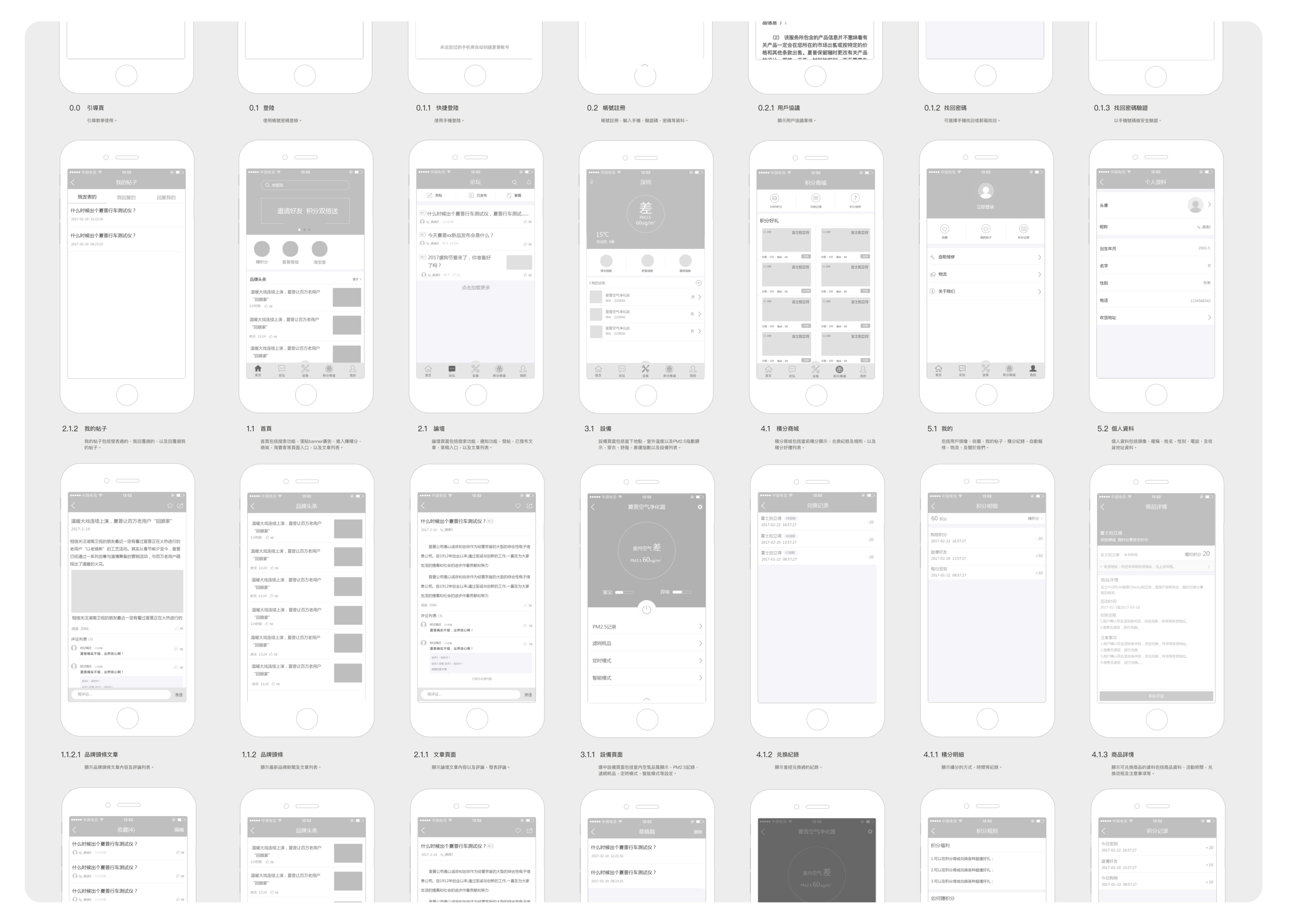
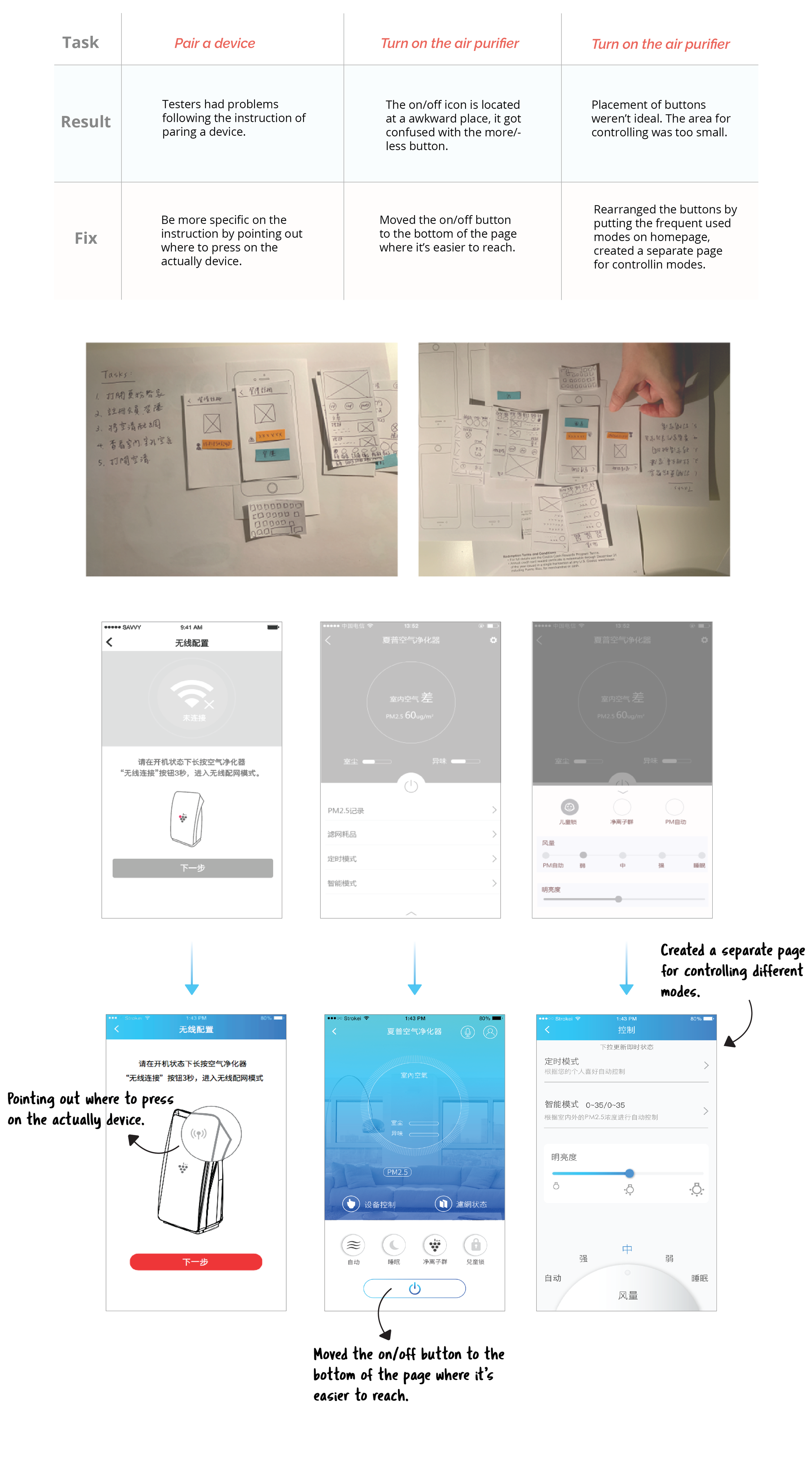
PAPER PROTOTYPING
To quickly test our concept, we created paper prototypes that demonstrate key user flow. We conducted user testing with 4 participants. We gave the participants low-fidelity wireframes and had them complete different tasks. We recorded their comments and went back to the wireframes to make changes.